

Description
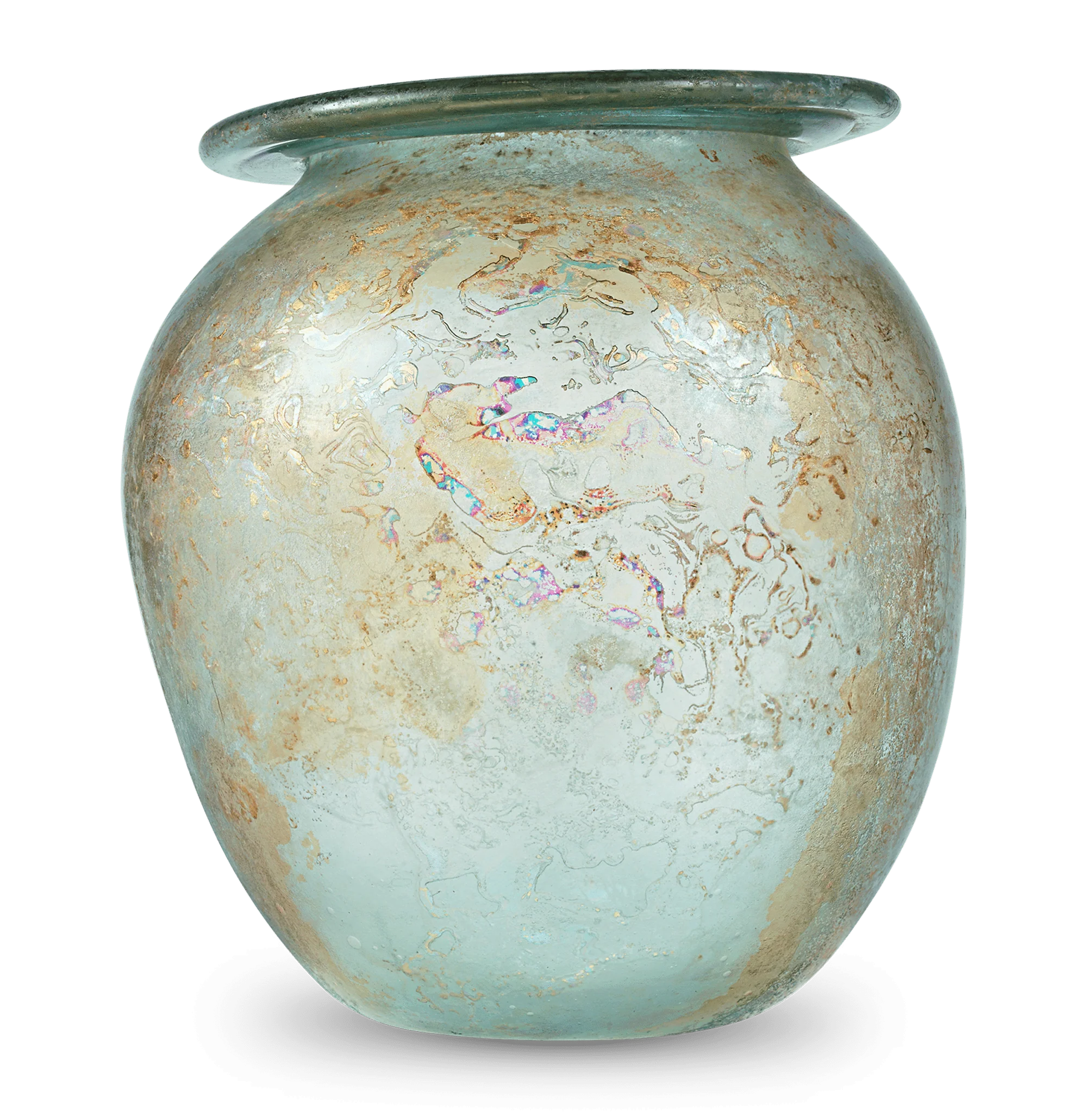
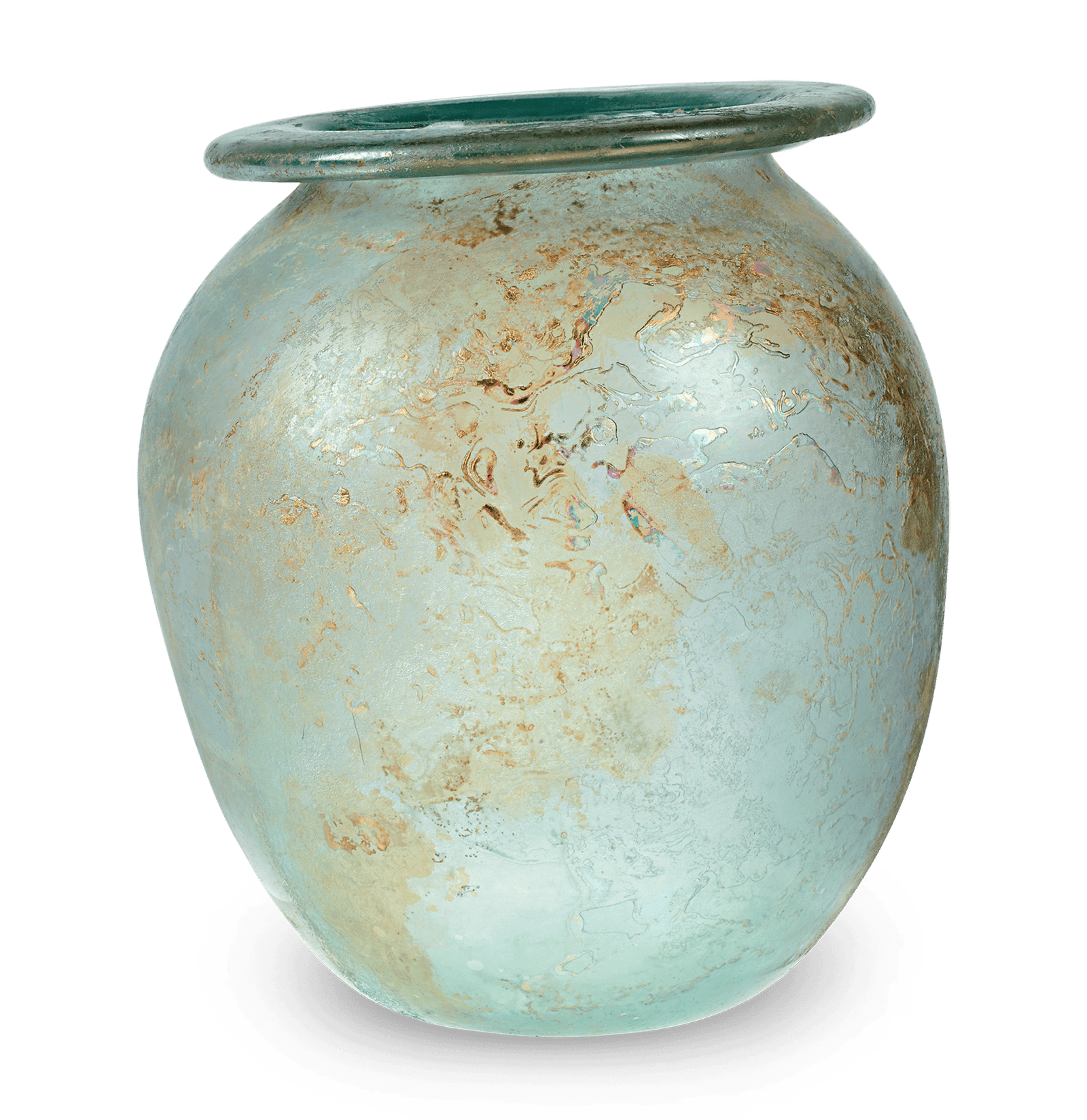
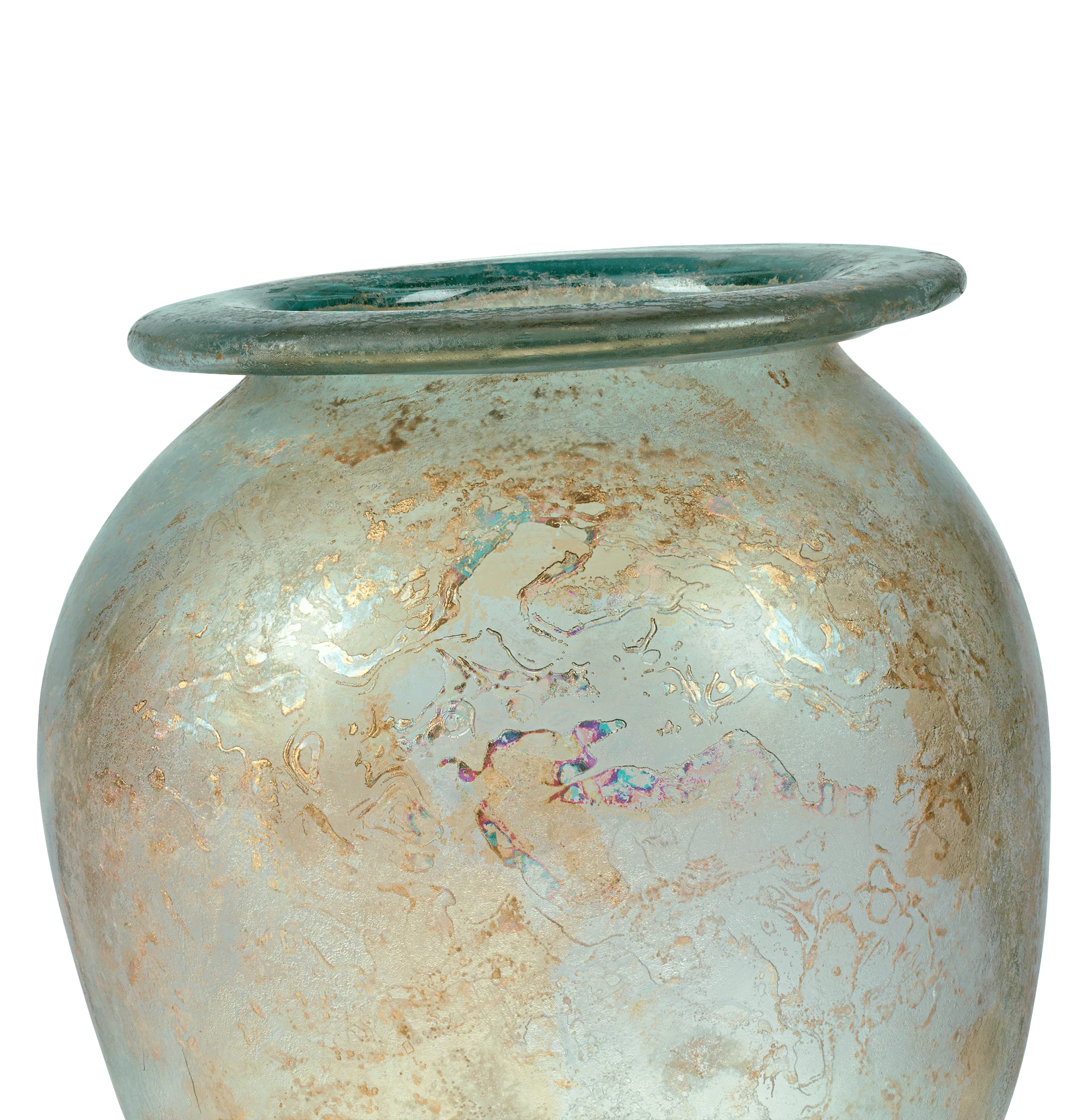
This extraordinary glass vessel hails from the illustrious Roman empire, likely from Italy, dating to the mid-1st to 2nd century CE. It is exceptionally rare to find such a large and beautiful example such as this not only completely intact but also in excellent condition, with its iridescent pale green glass showing minimal signs of its ancient age.
These vessels were created sometimes as storage jugs or, more commonly, as funerary urns that would contain the ashes of the deceased. In the early Roman Imperial period (1st-4th century), cremation was the preferred method of burial, and glass was the primary material used for these cinerary vessels. The shapes and styles of the vessels varied, with some featuring matching lids and handles. Some examples that were excavated from tombs in Italy, Gaul and Britain were found protected within stone or lead containers, which helps explain their remarkable preservation.
Other examples have been found largely in Europe, in the middle and north of the Roman Empire, with many featured in major museum collections such as the Louvre and the Metropolitan Museum of Art. A red inventory number graces the bottom of this vessel, indicating that it was likely acquired by a major museum around 1915.
Circa 1st—2nd Century CE
9 1/2″ high x 8 3/4″ diameter
Provenance:
Dina (1928-2021) and Raphael (1924-1999) Recanati Collection, New York, acquired by circa 1974
Thence by descent

Reviews
There are no reviews yet.