
Description
Pembroke Table
Thomas Chippendale
Circa 1760
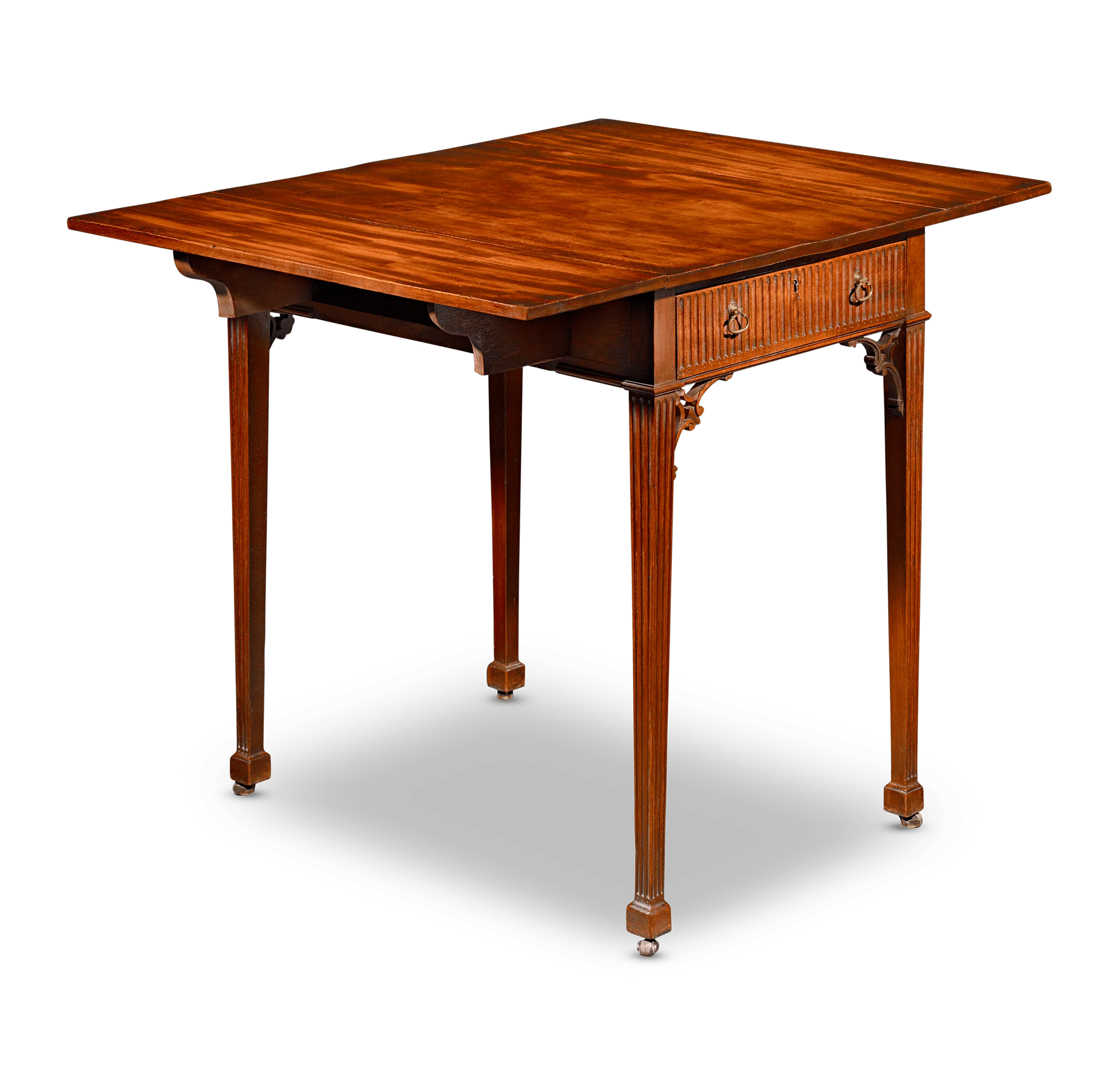
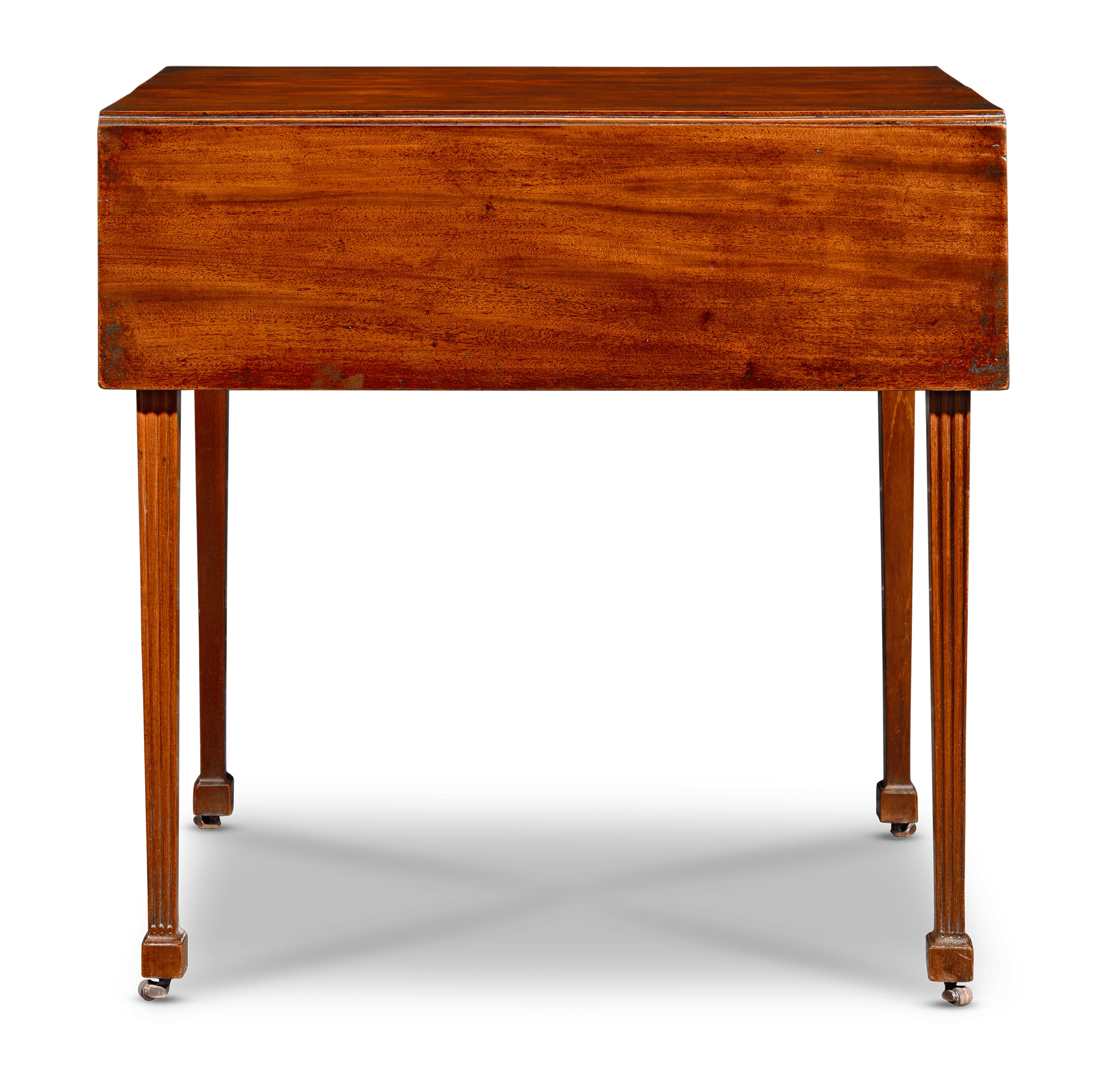
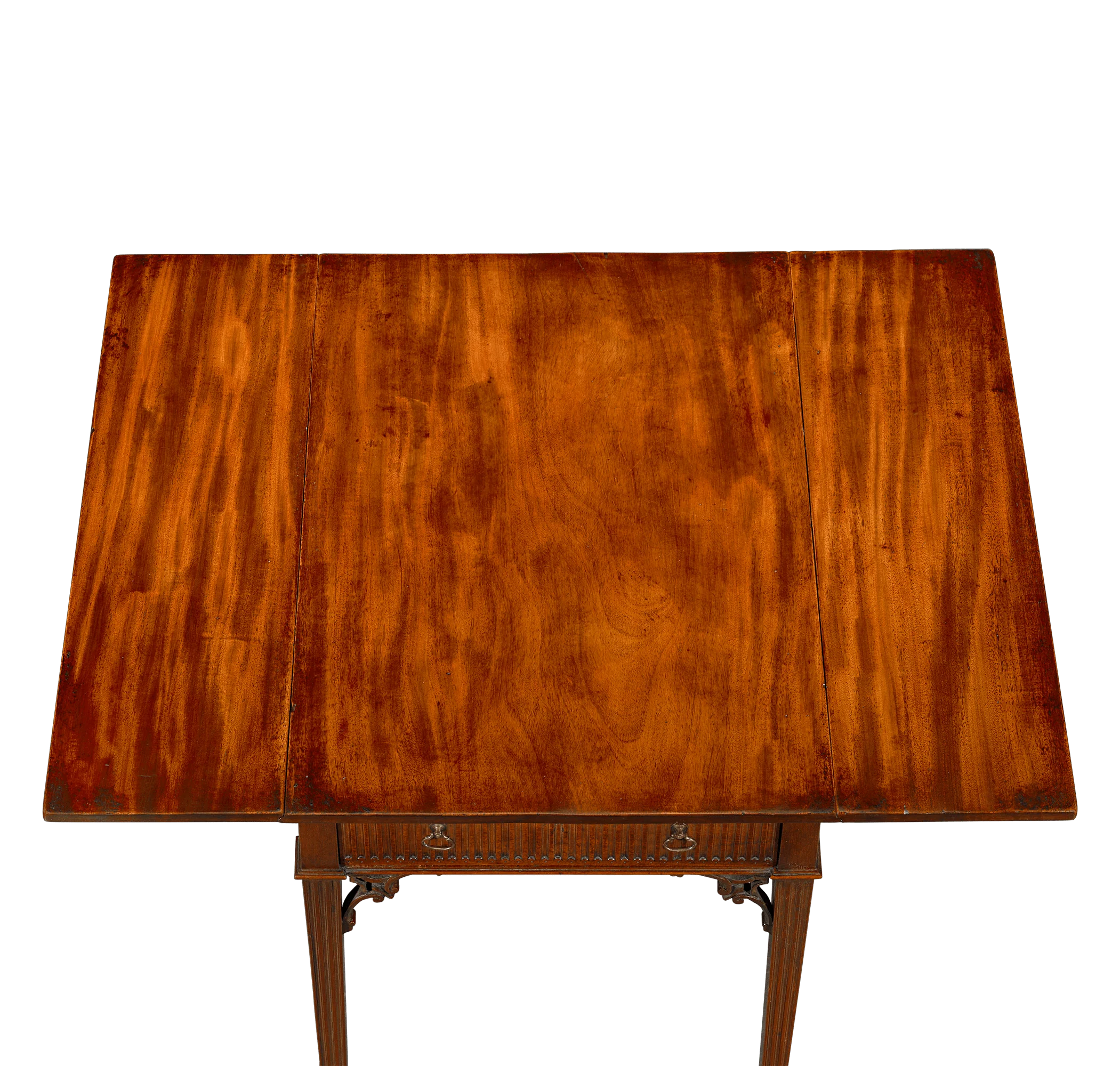
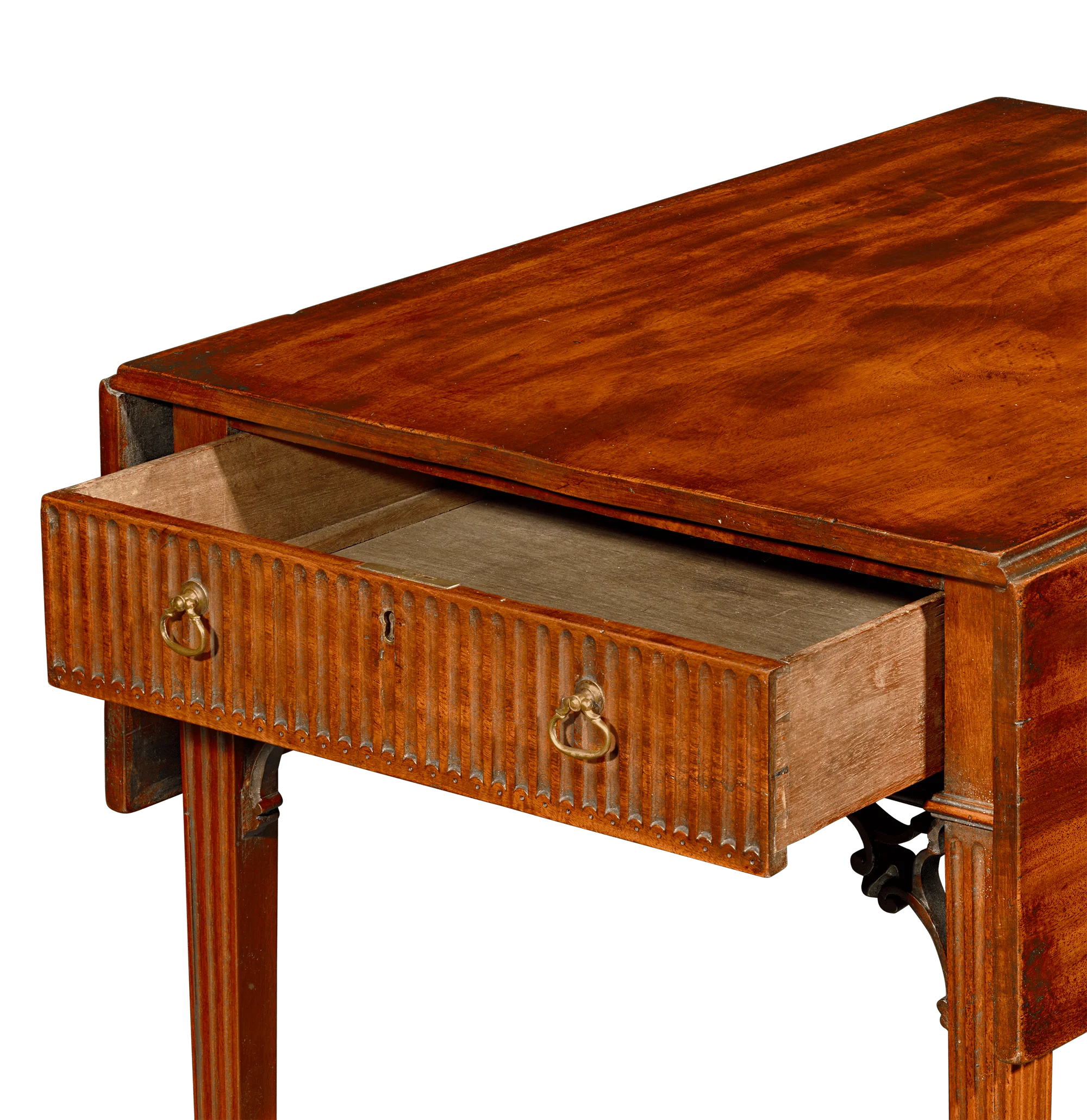
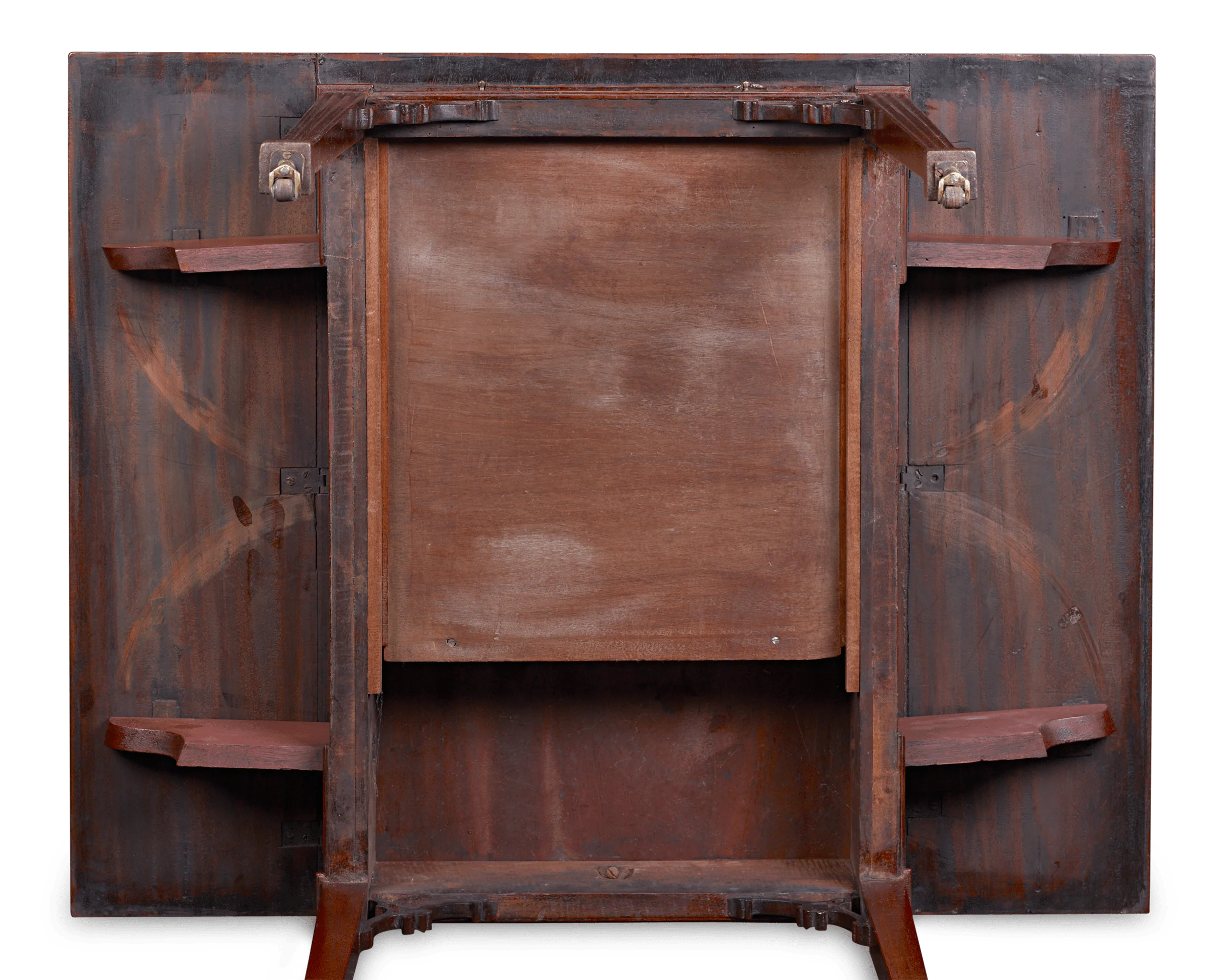
This highly significant Pembroke table is a rare example of Thomas Chippendale’s exceptional craftsmanship, showcasing his legacy’s unparalleled artistry. Its architectural elegance is evident in the exquisite front drawer and rear panel fluting, details consistent with Chippendale’s documented works. The table’s legs, adorned with supremely detailed fluting, exemplify Chippendale’s mastery of neoclassical design. Gilded brass handles—hallmarks of his creations—add a further touch of opulence. Nearly identical in design and refinement to the renowned Pembroke table at Nostell Priory (1769), this masterpiece stands as one of the most exquisite and architecturally significant examples of Chippendale’s work still in private hands.
The table has elegant proportions and meticulous detailing, from the symmetry of its fluting to the lustrous brass fittings, revealing Chippendale’s pursuit of perfection. Thomas Chippendale remains one of the most revered cabinetmakers in history, credited with revolutionizing furniture design in the 18th century. His style was the first in history to bear the name of an individual rather than a reigning monarch. Chippendale’s groundbreaking publication, The Gentleman and Cabinetmaker’s Director (1754), solidified his influence, with its 161 plates offering designs ranging from Gothic to Rococo. His clientele spanned royalty and notable figures, with commissions for grand estates such as Nostell Priory, Harewood House and Burton Constable. Despite his immense talent, Chippendale’s commitment to perfection often came at a financial cost, resulting in a legacy defined by unparalleled artistry rather than wealth. This Pembroke table embodies the elegance, craftsmanship and historical importance for which the Chippendale name is celebrated.
28 1/2“ high x 36 1/4” wide x 29“ deep
Reviews
There are no reviews yet.